
Two small transiting planets
Published evidence
TESS Sector 10, ground transit photometry, and HARPS velocities support the architecture.
How to read the 3D model
Published periods and available eccentricities drive the orbits. Missing eccentricities are modeled as circular. Starting phases, viewing orientation, compressed distances, and surface appearances are illustrative. The atlas lists these open questions: Visible texture, weather, and atmospheric abundances in the selected sources.
Planet measurements
These values use the Exoplanet Atlas’s selected published solution. A dash means the value is absent from that solution.
TESS observations
The NASA solutions include refinements to the discovery fit. The modest radius difference guides the art, while the metrics table identifies the selected solution.
Explore the MAST TESS archive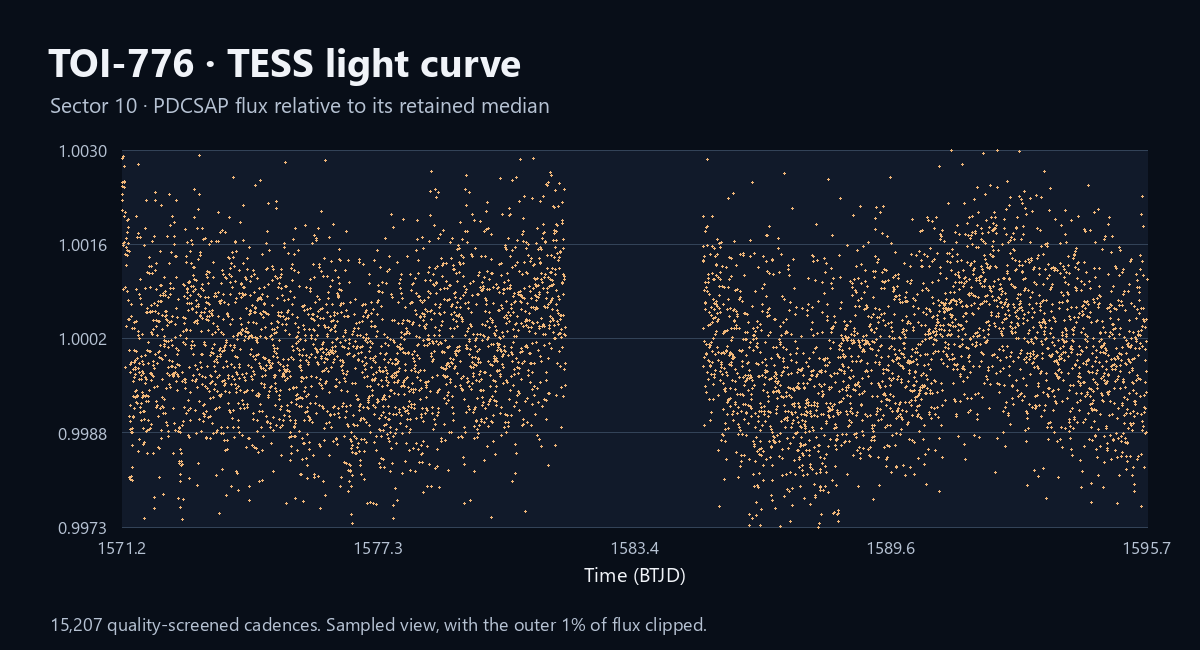
Sources
System cover illustration and observation plot from the Exoplanet Atlas.